

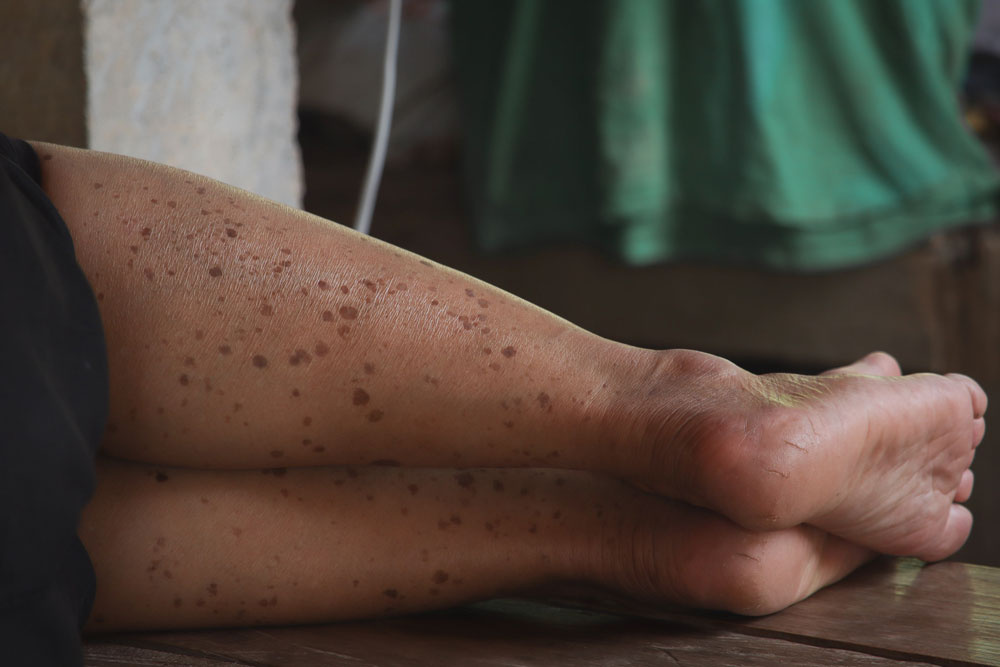
You may have noticed a flat brown spot on your cheek that was not there before, or maybe a few darker patches have started to appear on your chest or hands. At first, it feels like a cosmetic issue that can be addressed later.
But for many people in this situation, the question eventually comes up: Is this just sun damage, or is it something I should be concerned about?
It’s perfectly normal to have concerns about new spots on the skin, as many others do. Solar lentigines are one of the most common visible signs of cumulative sun exposure. They can look harmless, but not every brown spot should be treated the same way.
At Severn River Medspa, the focus is not just on removing these spots. It is on helping you understand what they are first, so that you can treat them safely and effectively.
What Are Solar Lentigines?
Solar lentigines are flat, brown spots that develop after repeated exposure to ultraviolet light. You may hear them referred to as sun spots, age spots or liver spots, but these terms all describe the same type of pigmentation. They form when UV exposure triggers certain areas of the skin to produce excess melanin, which gradually accumulates and becomes visible on the surface.
These spots most often appear on areas that receive the most consistent sun exposure, including the face, hands, chest and shoulders. While they may seem to appear suddenly, they result from long-term cumulative damage rather than a single event. A solar lentigo is not random. It reflects years of sun exposure.
Why Do They Appear Over Time?
Solar lentigines do not develop overnight. They form gradually as ultraviolet exposure builds up in the skin over time. Even if your current routine includes sunscreen and other protective measures, the effects of past exposure can still surface years later.
Sun damage accumulates beneath the surface, which is why many people begin to notice brown spots later in life rather than immediately after sun exposure.
Your skin retains a long-term memory of UV damage. That does not mean every brown spot is dangerous, but it does mean they should be evaluated before assuming they are purely cosmetic.
When Is a Brown Spot Cosmetic and When Should You Worry?
This is the most important distinction to make. Many solar lentigines are completely benign. They are stable in color, uniform in shape and do not change over time. These are the spots that patients typically choose to treat for cosmetic reasons.
However, not every pigmented lesion falls into that category. A simple way to evaluate a spot at home is the ABCDE rule:
- Asymmetry
- Border irregularity
- Color variation
- Diameter larger than about 6 mm
- Evolving over time
If a spot is changing, bleeding, itching, developing multiple colors or simply looks different from others on your skin, it should be evaluated by a dermatologist.
Cosmetic treatment should always come after medical confidence. That is why annual skin checks are strongly recommended, especially if you have a history of sun exposure or sunburns.
Cosmetic Treatment Options
Once a brown spot has been evaluated and confirmed to be benign, treatment becomes a cosmetic decision. For many patients, Intense Pulsed Light (IPL) is considered the gold standard for treating solar lentigines because it addresses both individual spots and the overall pattern of sun damage.
IPL works by delivering controlled pulses of broad-spectrum light into the skin, where it is absorbed by excess melanin. That energy converts to heat, breaking the pigment into smaller fragments that your body gradually clears away. It targets discoloration without damaging the surrounding skin, resulting in a more even, natural-looking result rather than a patchy or overtreated appearance.
Prevention Protects Your Results
Treating solar lentigines is only part of the process. Preventing new pigmentation is what protects your results. Because these spots are caused by cumulative sun exposure, your skin can continue to develop discoloration without consistent protection.
What you do after treatment determines how long your results last.
Daily Sun Protection
The most important step is using a broad-spectrum SPF 30 or higher every day. This applies even on cloudy days or indoors, as UV radiation still reaches the skin. Protective habits like wearing hats and limiting direct sun exposure also help maintain an even skin tone.
Ongoing Maintenance
Skincare and occasional maintenance treatments can help keep pigmentation under control over time. Here, patients can receive guidance on professional skincare and long-term treatment planning to maintain clear, balanced skin.
Clear Answers Come First
Solar lentigines are common and often harmless, but they should never be dismissed without understanding what they are. What looks like a simple sun spot can sometimes require a closer evaluation, and that distinction matters before any cosmetic treatment begins.
At Severn River Medspa, care starts with a thorough assessment to determine whether a spot is purely cosmetic or needs further medical attention. From there, treatment is tailored to your skin, goals, and long-term results, using advanced options like IPL and other customized therapies.
If you are ready to address sun spots or uneven pigmentation, the next step is a professional evaluation. Contact us at (410) 401-8839 or click here to schedule your consultation.